Mattress buying guide
Is the Vispring Elite Worth It? A Buyer’s Guide to Its Feel and Construction
The Vispring Elite makes a quiet argument for luxury: careful handwork, wool and cotton fillings, and a deep layer of individually pocketed springs. Whether that argument is persuasive depends less on the romance of its materials than on a more intimate question: how does it feel beneath your particular body?
A practical guide to the mattress’s construction, feel, firmness questions, and value—before you commit to a bed designed to be considered for years.
A mattress is often described as a list of ingredients, as if a bed were a recipe and the sleeper merely a discerning diner. Wool, cotton, steel: the nouns have a reassuring solidity. But a mattress is not experienced as a list. It is experienced in the dark, under a shoulder or a hip, after the novelty has passed and the body has begun to keep its own counsel.
The Vispring Elite belongs to the company’s Classic Collection and is presented as its entry point. “Entry” is relative: this is still a high-priced, traditionally made mattress, rather than an economical introduction to mattress shopping. Its design is notably restrained. The published construction describes two wool-and-cotton filling layers, a single spring layer, and hand-finishing associated with the brand’s mattresses. The question for a buyer is not simply whether those materials sound appealing. It is whether their combination suits the way you sleep, the bed base you own, and the amount you are willing to spend for this particular kind of construction.
This guide considers the Elite as a specific mattress, not as a promise of better sleep for everyone. A mattress can be made with excellent materials and still feel wrong to the person lying on it. The most useful approach is to understand what the construction may contribute, identify what the specifications do not tell you, and test the bed with enough patience to distinguish a pleasant first impression from a genuinely suitable fit.
What the Vispring Elite is made of
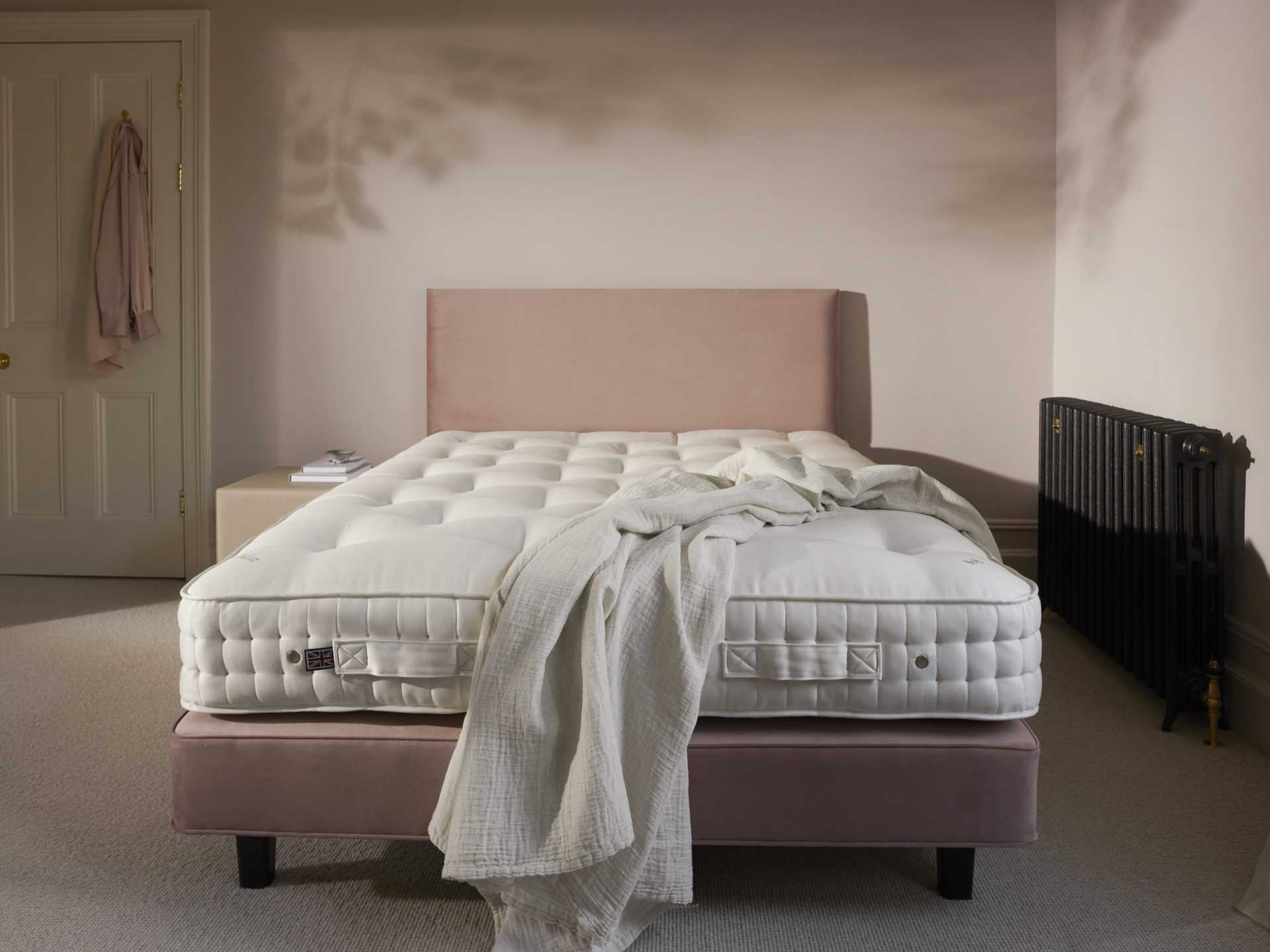
According to the product description, the Elite has a comfort surface upholstered on both sides with a layer of Platinum Certified British fleece wool and cotton, stated at 1,350 grams per square metre. Beneath that sits a second layer of blended British fleece wool and cotton. The wording describes a surface built from natural fibres rather than a thick stack of synthetic comfort foams.
Wool is valued in bedding partly for how it handles moisture. It can absorb water vapour and release it into surrounding air, which may help the sleep surface feel less clammy as conditions change. That is a material characteristic, not a guarantee that every sleeper will feel cool. Room temperature, bedding, personal physiology, and the way the mattress is layered all matter. Wool does not turn a warm bedroom into a cool one; it is better understood as one element in a larger thermal environment.
The support system is described as 1,716 hand-nested vanadium steel pocket springs in a king size, each enclosed in breathable calico cotton. Pocket springs respond individually to pressure, so the area beneath a shoulder or hip can compress without requiring every neighbouring spring to move in lockstep. That independent action is one reason pocket-spring beds are often considered by couples and by sleepers who want a more responsive surface than a continuous spring unit can provide.
The advertised spring count is specific to a king-size mattress. It should not be treated as a universal measure of quality, or compared casually with a different mattress’s count without knowing the size, spring design, gauge, arrangement, and construction. A larger number does not automatically mean better support. What matters is how the whole system behaves under your weight and in your preferred sleeping position.
The description also calls out a wool-upholstered border finished with two rows of hand side-stitching. Side-stitching can help stabilise the perimeter and make more of the mattress surface usable, while hand-tufting with felt washers is intended to hold fillings in place. These methods speak to construction and maintenance of shape; they do not establish, by themselves, that a mattress will suit a particular back, shoulder, or hip.
How might it feel?
It is tempting to infer a mattress’s feel directly from its materials: wool means soft, springs mean bouncy, natural means breathable. In practice, such shorthand is unreliable. The Elite combines a spring system with wool-and-cotton upholstery, but the final impression depends on the tension and layout of the springs, the depth and distribution of the comfort layers, the sleeper’s body, and the foundation beneath the mattress.
In broad terms, pocket springs are known for a more buoyant, responsive sensation than many all-foam beds. They compress under load and recover when pressure is removed. Wool upholstery can add a cushioned, somewhat yielding layer at the surface, though it may not create the slow, enveloping contouring associated with some memory-foam designs. That is a general expectation based on the construction, not a substitute for testing this particular model.
Ask the retailer for the Elite’s current firmness options and the specifications for the version available in your size and market. Firmness labels are not standardised across brands. One company’s “medium” can feel quite different from another’s, and the same mattress can seem firmer to a lighter sleeper than to a heavier one. If the label is all you have, you do not have enough information.
When trying the mattress, lie down in the position in which you actually sleep. Give it more than a brief sit at the edge. A side sleeper should notice whether the shoulder and hip can settle without an uncomfortable pressure point, while the waist remains supported. A back sleeper can pay attention to whether the pelvis feels held rather than sinking disproportionately. A stomach sleeper may be especially alert to excessive give around the midsection. These are useful observations, not medical diagnoses or guarantees of pain relief.
Try to relax rather than perform a mattress test as if it were an inspection of a hotel room. Stay in each position for several minutes. Turn over. Notice whether movement feels easy, whether the surface pushes back in a way you like, and whether your partner’s movement is distracting. If you share a bed, test together: individual spring response can reduce some movement transfer, but it cannot promise that you will not feel a partner shifting.
Firmness, sleep position, and body weight
There is no universally correct firmness. The goal is a surface that feels comfortable while supporting your body in a reasonably neutral position. Sleep position offers a starting point, not a rulebook. Side sleepers often prefer enough give around the shoulders and hips to reduce concentrated pressure. Back sleepers may look for a balance that supports the lower back without forcing the pelvis upward. Stomach sleepers commonly need to consider how much the middle of the body sinks.
Body weight changes how a mattress compresses. A sleeper with a lighter frame may experience a surface as firmer because less force is applied to the comfort layers and springs. A heavier sleeper may feel more of the mattress’s underlying structure. The effect is not a simple equation, and two people of the same weight can have different preferences, but it is one reason showroom impressions should be personal rather than borrowed from reviews.
For couples with different preferences, examine the practical options before purchase. Ask whether the mattress is offered in different tensions, whether split configurations are possible, and how each option affects delivery, feel across the centre, and warranty. Do not assume a model has a particular customisation merely because the manufacturer offers it elsewhere in its range.
Existing discomfort also deserves care in the decision. A mattress may be part of a person’s sleep experience, but it is not a treatment for a diagnosed condition. If pain is persistent or worsening, seek advice from an appropriate health professional. In the store, focus on whether the bed feels comfortable and supportive to you rather than accepting broad claims that a given mattress will correct posture or eliminate pain.
The value of traditional construction
The Elite’s appeal is not based on a long procession of layers. Its proposition is more measured: wool and cotton upholstery, pocketed steel springs, and labour-intensive finishing such as hand side-stitching and tufting. For buyers who value those materials and techniques, the appeal can be tangible. There is a sense of a mattress assembled as a durable object, rather than a compressed block designed primarily around easy shipping.
That distinction does not make every traditional mattress superior to every modern foam or hybrid model. Different construction methods solve different problems. Foam beds can offer close contouring and can be available at substantially lower prices. Hybrid mattresses combine foam and springs in many configurations. A traditional pocket-spring mattress may appeal to someone who prefers buoyancy, natural fibre upholstery, or a particular hand-finished build. The right comparison is not old versus new, or natural versus synthetic, but the actual feel, materials, service, and cost of the choices in front of you.
At a listed price of about $3,600 in the supplied product information, the Elite is a substantial purchase. Confirm the current price, size, taxes, delivery charges, and any foundation or accessory costs with the seller; prices and configurations can change. Value is not simply the lowest price divided by the number of springs. It includes whether you enjoy sleeping on the mattress, how it is supported, what care it requires, the available warranty, and the retailer’s policies if the initial choice proves unsuitable.
The product is available as the Vispring Elite. Read the current specifications and sale terms directly before ordering. A product description can establish what the manufacturer says is inside the mattress; it cannot settle the personal question of whether the bed feels right.
Questions to ask before buying
Luxury bedding can encourage the buyer to focus on craftsmanship and material names. It is sensible to do so, but the practical questions are often less glamorous and more consequential. Ask the retailer to identify the exact construction for your selected size, confirm firmness or tension choices, and explain whether the mattress is designed to be used on both sides. The description says the surface is upholstered on both sides; still, verify the recommended turning or rotation schedule for the model you are buying.
- What firmness options are currently available? Ask how each is described and whether you can test the precise option you intend to order.
- What base is recommended? A mattress’s feel and support can change with its foundation. Check compatibility with your existing frame and any requirements for slats, spacing, or ventilation.
- What are the trial and return terms? Confirm the length of any comfort period, collection fees, condition requirements, and whether an exchange is treated differently from a return.
- What does the warranty cover? Read the exclusions, duration, and process. Warranty language is not the same as a promise that a mattress will feel comfortable for its entire life.
- How should it be cared for? Confirm how often it should be rotated or turned, what kind of protector is suitable, and how to respond to spills or stains.
- What exactly does a certification apply to? If a material or product is described as certified, ask which component or standard is covered and consult the certification details rather than relying on a broad label.
These questions matter especially when a mattress is ordered without an in-person test. A generous return policy can reduce risk, but its practical value depends on the conditions. A showroom test can help, but it does not replicate a full night’s sleep. Neither approach removes uncertainty; together, a careful trial and clear written terms make the decision more informed.
Care, longevity, and realistic expectations
Natural fibres and carefully finished edges are not maintenance-free. The mattress should be used on a suitable base, protected from avoidable spills, and cared for according to the maker’s instructions. A breathable protector may help guard against routine soiling while preserving the surface feel, but check that the chosen protector does not make the bed too warm or alter the way it responds.
If the model is designed to be turned, follow the recommended schedule and get help lifting it. If it is intended only to rotate, do not assume that flipping is appropriate. Turning practices depend on the construction. Regularly inspect the bed base as well: a sagging or unsuitable foundation can affect how the mattress performs and may complicate a warranty claim.
Hand tufting and side-stitching help secure the upholstery and stabilise the perimeter, but no mattress is immune to gradual change. Fillings can settle, and the surface can soften with use. The question is not whether the mattress will remain exactly as it felt on day one, but whether its materials and construction are likely to provide the experience you want, with care that fits your household.
Wool’s moisture-handling properties and the ventilation associated with a pocket-spring structure may be attractive to people who dislike a hot, enclosed feel. Yet heat is personal. Sheets, duvet weight, room conditions, sleepwear, and individual temperature regulation all contribute. A breathable mattress can be part of a cooler bed, but no single material controls the entire climate of a night.
Who is the Vispring Elite for?
The Elite may merit close consideration if you prefer the responsive feel of pocket springs, value wool-and-cotton upholstery, and want a mattress built around traditional finishing rather than a thick foam comfort stack. It may also appeal if you are willing to invest in a premium product and can test the exact feel—or secure clear trial terms—before committing.
It may be less compelling if your first priority is close, slow contouring; if you are trying to stay within a modest budget; or if the available tension does not match your comfort preferences. Someone who likes an especially plush surface should pay careful attention to how the Elite feels in practice rather than assuming that natural wool necessarily means softness. Someone who wants a firm bed should do the same: materials and construction alone do not establish a reliable firmness verdict.
For shoppers comparing a traditional mattress with a lower-cost foam option, the differences are not merely material. The Vispring asks you to pay for a particular set of materials and construction choices. A simpler mattress may provide the comfort you need at a fraction of the cost. The more expensive bed is worth considering only if its specific feel and build matter to you—not because price itself is evidence of a better night.
So, is it worth it?
The Vispring Elite is easiest to understand as a carefully constructed, natural-fibre pocket-spring mattress with a premium price, not as a universal solution. Its wool-and-cotton upholstery, individual springs, and hand-finished border give it a clear identity. Those details may justify the expense for a buyer who appreciates this kind of construction and finds the mattress comfortable in the firmness available.
But “worth it” is a conclusion that belongs to the sleeper, not the specification sheet. Compare its feel with alternatives, test it in your own sleep positions, and ask specific questions about firmness, foundation compatibility, care, trial terms, and warranty. Consider your budget in full, including any required base and delivery costs. If the mattress feels supportive and inviting after a proper test—and the purchase terms are satisfactory—the Elite may be a considered investment. If the appeal rests mostly on its reputation, materials list, or price, keep looking.
A good mattress does not need to win an argument. It needs to meet the body where it is: a shoulder that wants room, a back that prefers steadiness, a sleeper who turns often, or a couple trying to find common ground. The Elite’s construction offers a thoughtful starting point. The decisive evidence is simpler, and more personal: the feeling of lying down and not wanting to get back up.