Organic Mattresses · Buying Guide
What to Look for in a Luxury Natural Mattress
“Luxury” is a generous word. It may describe a mattress made with carefully sourced materials and layers designed to last, or it may describe a price tag and a pleasingly elaborate label. To tell the difference, look past the adjectives: examine the certifications, construction, comfort, care requirements, and warranty.
A practical guide to comparing natural mattress materials—and deciding which details deserve your attention.
A mattress is one of the more intimate objects in a home. It has no public-facing side, no mantelpiece presence, no obligation to impress a dinner guest. Yet it occupies the room’s largest piece of real estate and quietly determines the character of the hours spent there. It is also an object on which a shopper can spend a remarkable amount of money while knowing surprisingly little about what lies beneath the cover.
The phrase luxury natural mattress does not settle the matter. “Natural” may refer to one component in a complicated assembly. “Organic” may apply to a particular fiber, not the whole mattress. “Luxury” may mean generous customization, careful handwork, premium materials, or simply a high price. The useful question is not whether a mattress sounds virtuous or sumptuous. It is whether its materials, construction, feel, and upkeep make sense for the person who will sleep on it.
That inquiry begins with the whole mattress—not a single appealing ingredient. A natural latex core can be paired with wool and cotton, for instance, but the quality and proportion of each material matter. So do the cover, flame barrier, adhesives or other treatments, and the way the layers are held together. A clear, complete materials list is a better beginning than a long description full of reassuring but undefined language.
Start with the full materials list
Before comparing prices or choosing a firmness, find out what the mattress is made of from top to bottom. Look for a layer-by-layer description that names the material, its thickness or weight where relevant, and its position in the mattress. If a manufacturer describes a mattress as “natural,” ask which components are natural and which are not. The word alone does not tell you the percentage of latex, whether the latex is natural or blended, or what is used in the cover and fire barrier.
Common materials in natural mattresses include latex, wool, and cotton. They are not interchangeable, and each plays a different part. Latex is resilient and responsive: it compresses under pressure and tends to spring back rather than slowly retaining an impression. Wool may serve as a comfort layer, a quilted fill, or a flame barrier, depending on the design. Cotton often appears in covers and fabric layers. Some mattresses combine these materials with other components, so a familiar ingredient does not make the entire construction self-explanatory.
Ask whether the latex is natural, synthetic, or a blend. Natural latex is made from rubber-tree sap; synthetic latex is produced using petrochemical inputs; blended latex combines the two. The words used in marketing can vary, so check the manufacturer’s precise description and any relevant certification. If a product description names a latex type but not its source or composition, that is a reason to request clarification rather than an invitation to guess.
It is equally useful to learn whether the mattress is built around one continuous core or several separate layers. A layered design can give shoppers options for adjusting firmness, while a single core offers a simpler construction. Neither is automatically superior. The value depends on how the mattress feels, whether the layers are replaceable or rearrangeable, and whether the design suits the person using it.
Read certifications with care
Certifications can make a complicated materials claim easier to assess, but they are not magic words. Each standard has a defined scope. A certification may apply to the latex, the cotton, the finished textile, or a facility’s manufacturing practices; it does not necessarily certify every part of the mattress. The most helpful product information identifies the certified component and names the standard, rather than placing a logo or acronym beside a broad claim.
For organic latex, shoppers may encounter GOLS, the Global Organic Latex Standard. For organic textiles, including cotton, GOTS—the Global Organic Textile Standard—is a familiar name. Other certifications, including FSC, may address the sourcing or management of particular materials. These standards differ in what they assess. A certificate for one component should not be read as proof that an entire mattress has the same status.
Ask for the certification details when the distinction matters to you. Is the certificate current? Does it cover the specific material in the model you are considering? Does it apply to the finished product, a raw ingredient, or a production facility? A careful seller should be able to explain the scope without turning the conversation into a fog of abbreviations.
Certifications can help establish standards and traceability, but they do not answer every question about comfort, durability, or environmental impact. Nor do they guarantee that a mattress will feel good to you. Treat them as evidence about defined claims, not as a substitute for examining the construction or testing the bed.
Understand how the layers work together
A mattress is not a list of materials so much as an arrangement of them. The same ingredients can produce different results depending on thickness, density, order, and the way they are joined. A thin wool layer over latex will not feel like a thick wool comfort layer above the same core. A firm latex layer near the surface may feel quite different from a softer layer placed above a firmer support layer. Construction is the sentence; materials are the words.
In latex mattresses, manufacturers may use Dunlop or Talalay latex. These names refer to different production processes, and shoppers will often see both described as natural latex. They can differ in feel and production details, but the label alone does not tell you whether a mattress is right for you. Layer firmness, thickness, cover tension, and the overall design matter. If two products use different latex processes, try them rather than assuming one is universally softer, more durable, or more luxurious.
Consider the mattress’s height and intended use, too. A lower-profile model might work well in a child’s room, on a bunk bed, or for a smaller adult; another sleeper may need a thicker construction or a different support profile. A customizable mattress can be useful if it lets you select or exchange layers, but customization is only valuable when the choices are understandable and the policy is practical. Find out whether both sides of a larger mattress can be configured independently, what an exchange costs, and how long you have to decide.
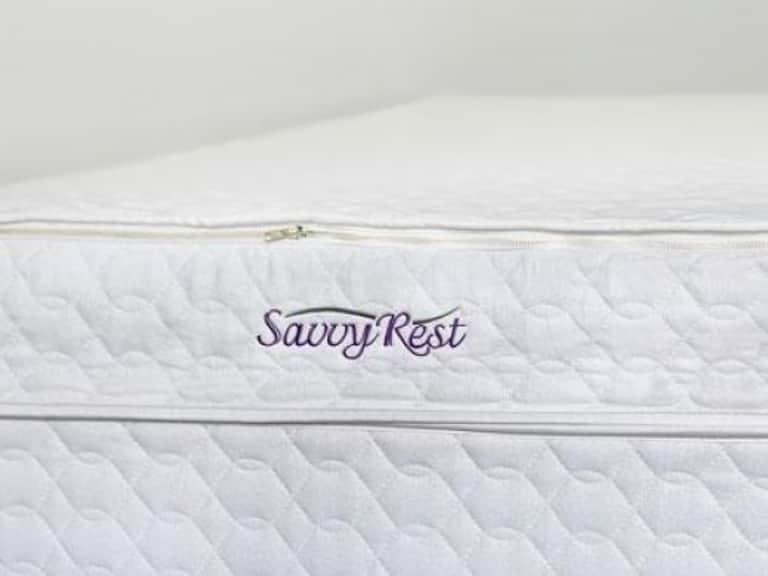
As one example of a layered latex design, the Savvy Rest Tranquility Latex Mattress is described as a seven-inch mattress made with two latex layers and an organic cotton cover, with Dunlop or Talalay options. Its stated design is intended for children, smaller adults, or shoppers seeking a relatively firm, lower-profile mattress. Those specifications illustrate why intended use matters: the same mattress is not necessarily appropriate for every body or bedroom. Review the maker’s stated limits and policies, and compare the construction with your own needs rather than treating one example as a universal recommendation.
Choose for comfort, not for a label
Firmness is personal, and the word is less precise than it looks. One company’s “medium” can be another’s “firm,” and the feel may change with body weight, sleep position, and the bed base. A showroom test can offer useful information, but a few minutes lying still under flattering lights is not the same as a night’s sleep. If possible, look for a meaningful home trial or exchange policy, and read its terms before buying.
Think about how you sleep most often. Side sleepers commonly pay attention to shoulder and hip pressure; back sleepers may look for a surface that feels supportive without pushing uncomfortably into the lower back; stomach sleepers may prefer a firmer feel. These are starting points, not rules. Bodies differ, sleep positions change, and pain or medical concerns may require individualized advice from a qualified health professional rather than a mattress brochure.
For couples, consider whether each person needs a different feel. Some manufacturers offer split configurations, in which each side of a larger mattress can use a different firmness. This may be more useful than chasing a compromise that pleases neither sleeper. Also test how much motion transfers across the bed if one partner moves frequently. Product descriptions may make claims about motion isolation, but an in-person test or a clear trial policy is more informative than a phrase on a page.
A pillow, foundation, and mattress protector can alter the experience, too. A pillow affects head and neck position; a protector may add a layer between the sleeper and the mattress; and a foundation must provide suitable support. If a seller specifies a slatted base, note the required spacing and ventilation. Even an excellent mattress can feel wrong on an incompatible base, and a poorly chosen pillow can make a comfortable bed feel like a puzzling failure.
Put price in context
A high price may reflect more expensive raw materials, skilled labor, domestic manufacturing, customization, or a longer warranty. It may also reflect branding, distribution, and the economics of a small production run. Price is a fact about what a seller asks; by itself, it is not proof of superior support, safer materials, or longer life.
To compare value, look at the details that explain the cost. How thick is the latex core? How many layers are included? Are the materials certified, and what exactly do those certifications cover? Is the mattress customizable? Can individual layers be exchanged or replaced? What delivery, setup, return, and disposal fees might apply? The purchase price is only one line in the total cost of ownership.
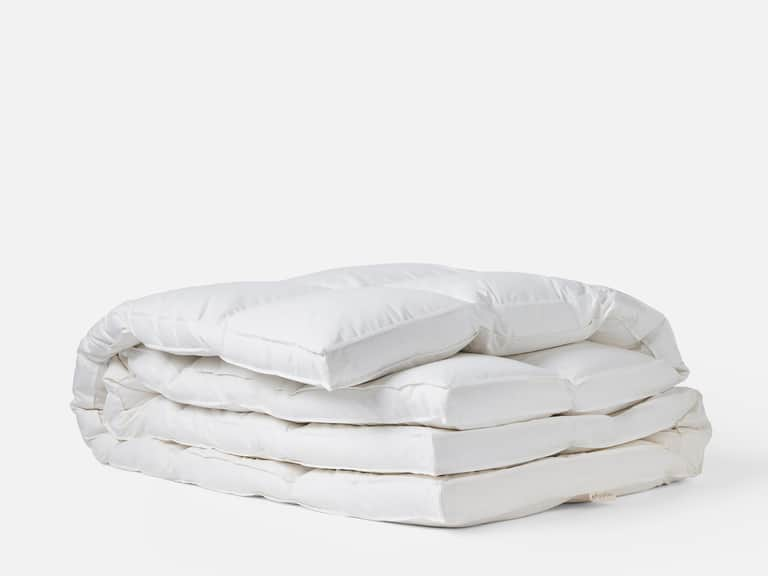
It can also be useful to distinguish a mattress from a topper or featherbed. A topper changes the surface feel of an existing mattress; it does not necessarily repair a worn-out support core. A featherbed creates a soft, lofted layer and has different materials and care needs from a latex mattress. These accessories can be excellent for their intended purpose, but they are not direct substitutes for a complete mattress when the underlying bed no longer offers adequate support.
Ask what happens if the mattress does not work out. A “trial” may require the buyer to keep the product for a minimum period, pay return shipping, or accept a layer exchange rather than a refund. A warranty may cover manufacturing defects but exclude gradual softening, comfort preference, or damage from an unsuitable foundation. Read the exclusions before the purchase, when they are still easy to consider calmly.
Care is part of the design
Natural materials still need care. A mattress with a non-removable cover is not the same proposition as one with a washable cover, and “natural” does not mean impervious to spills, sunlight, or neglect. Before buying, find out whether the cover can be removed, whether it can be washed, and what the manufacturer recommends for spot cleaning. Avoid assuming that a removable cover belongs in a washing machine; some are designed to be removed but not laundered at home.
Latex generally should not be soaked or exposed to direct sunlight for extended periods, which can degrade it. Wool and cotton have their own care instructions. If the mattress contains layers that can be rearranged, ask how to open and reassemble it, whether the cover is designed for repeated access, and whether the manufacturer recommends rotating or flipping the mattress. These details can sound mundane during the excitement of a purchase, then become central when something spills.
A breathable, properly supportive base can help the mattress stay in good condition. Follow the manufacturer’s instructions about slats, platform bases, and ventilation rather than assuming all bed frames are interchangeable. A protector can guard against ordinary spills and soiling, but check that it fits securely and does not interfere with the feel or airflow you chose the mattress to provide.
Care instructions are not a minor appendix. They are part of the cost and convenience of ownership. A mattress that fits your preferences but requires maintenance you cannot reasonably provide may not be the right purchase, however fine its materials may be.
Read the warranty as a map of expectations
Warranty length attracts attention, but a long term is not a promise that every change in comfort will be covered. Warranties usually define the defects they address and the conditions that must be met. They may specify an acceptable indentation depth, require the original purchaser to retain proof of purchase, or exclude damage from improper support, stains, or unauthorized handling.
Find out whether the warranty is limited or full, what remedy is offered, and whether shipping or labor costs are the buyer’s responsibility. Check whether using an adjustable base is permitted if that is part of your setup. If a product has a separate layer-exchange policy, compare that policy with the warranty: one may help with initial comfort adjustment, while the other deals with manufacturing defects.
A warranty is most useful when its terms are clear and the expected support remains available. A direct answer to a specific question—about slat spacing, a foundation, or the procedure for making a claim—can tell you more about the buying experience than a large number printed beside the word “years.” Keep the care instructions and warranty documents after delivery; the details are easier to follow when they are close at hand.
A simple comparison checklist
When several natural mattresses appear similar, put them side by side on a short list. The goal is not to turn a bedroom decision into a procurement exercise. It is to separate verifiable details from decorative language and keep the questions that matter visible.
- Materials: Is every layer identified, including the cover, fire barrier, and any blended or synthetic components?
- Certifications: Which component is certified, under what standard, and can the seller explain the scope?
- Construction: What are the layer order, thickness, and latex type? Can the layers be adjusted or replaced?
- Fit: Does the firmness suit your preferred sleep position, body, and bed partner? Is there a useful trial or exchange policy?
- Compatibility: Does the mattress work with your frame or adjustable base, and are there specific support requirements?
- Care: Is the cover washable? What should be done about spills, sunlight, rotation, and ventilation?
- Ownership costs: What are the delivery, setup, return, exchange, and disposal fees?
- Warranty: What defects are covered, what conditions apply, and who pays for transport or service?
Answers do not need to be elaborate to be useful. A precise materials list, a comprehensible certification explanation, and an unambiguous return policy can make a product easier to evaluate than a page of superlatives. If essential details are missing, ask. If the answer remains vague, treat that as information in its own right.
The quieter definition of luxury
There is a familiar fantasy attached to a luxury mattress: a perfectly composed object that solves sleep with the authority of a well-appointed hotel room. Real comfort is more modest and more individual. It is the shoulder that does not ache, the bed that does not feel too warm, the partner’s movement that does not become a nightly announcement. Materials can contribute to those qualities, but they cannot guarantee them.
The most convincing natural mattress is not necessarily the one with the greatest number of organic claims or the longest list of premium-sounding components. It is the one whose construction is legible, whose materials are documented, whose feel suits its sleepers, and whose requirements are manageable. A thoughtful warranty and a fair exchange policy matter. So does a seller willing to explain what “natural” means in this particular product rather than expecting the word to do all the work.
Luxury, in the end, can be understood as the absence of unpleasant surprises: knowing what is inside the mattress, how the layers are meant to behave, what the certifications establish, and what to do when care is required. The bed itself need not announce any of this. It can simply do its work, quietly and dependably, while the room resumes its ordinary business of being a room.